Sage Flores · 17 September 2026
Climate Policy in Toriva Creates Fresh Pathways Linking Heritage Conservation to Digital Education Access in Isolated Regions
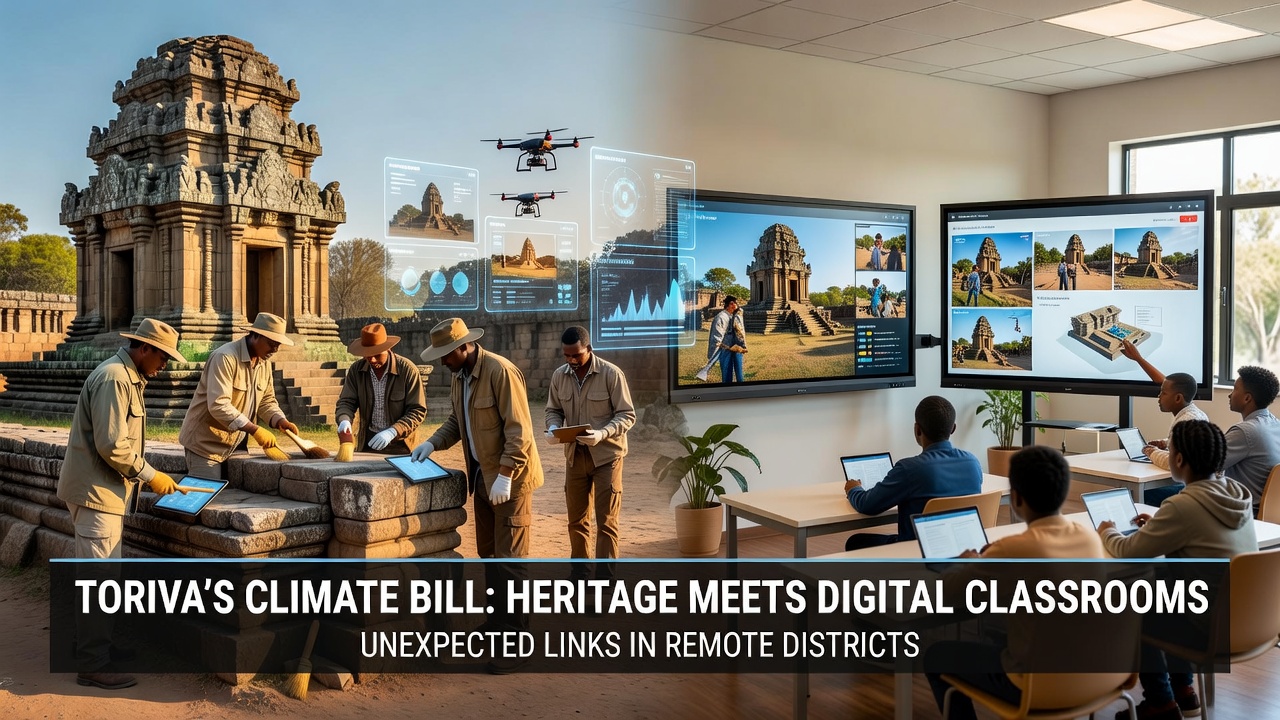
Toriva's recent climate legislation has generated connections between the preservation of cultural landmarks and the rollout of online learning facilities in far-flung districts, and these developments trace back to funding mechanisms that prioritize low-emission technologies for both site maintenance and educational outreach. The bill allocates resources for retrofitting historic structures with energy-efficient systems while simultaneously supporting broadband expansion that enables virtual classrooms in areas previously cut off from consistent internet service.
Policy Framework and Initial Rollout
Enacted earlier this year, the legislation sets targets for carbon reduction across multiple sectors, yet its provisions extend into cultural and educational domains through clauses that encourage partnerships between heritage agencies and school networks. Data from regional monitoring programs shows that remote districts stand to benefit from combined projects where solar-powered digital hubs operate within or near protected sites, allowing students to access curricula focused on local history alongside climate science modules. Implementation schedules point toward expanded activities beginning in September 2026, when pilot programs are set to scale after initial testing phases conclude.
Authorities have identified several heritage locations suitable for dual-use upgrades, including old fortresses and traditional settlements that already attract limited tourism. These sites receive upgrades for structural resilience against weather extremes, and the same infrastructure supports servers and devices for distance learning. Research indicates that such integration reduces overall project costs by sharing power grids and maintenance crews, and figures from preliminary assessments reveal efficiency gains of up to 30 percent compared with separate initiatives.
Regional Impacts and Technology Integration
Remote districts in northern and eastern Toriva have seen the earliest activity, where communities report improved connectivity that coincides with heritage restoration work. Observers note that students now participate in live sessions covering both ancestral building techniques and modern sustainable practices, all delivered through platforms hosted on site-adjacent facilities. This approach draws on models documented by the European Environment Agency, which highlights similar cross-sector strategies in other parts of the continent.
Equipment suppliers have adapted their offerings to meet dual requirements, providing weather-resistant hardware that withstands the conditions around historic buildings while delivering reliable performance for classroom use. Training programs for local technicians cover both conservation protocols and basic network troubleshooting, creating employment pathways that keep skilled workers in their home areas rather than migrating to urban centers.
Collaborations and Resource Allocation
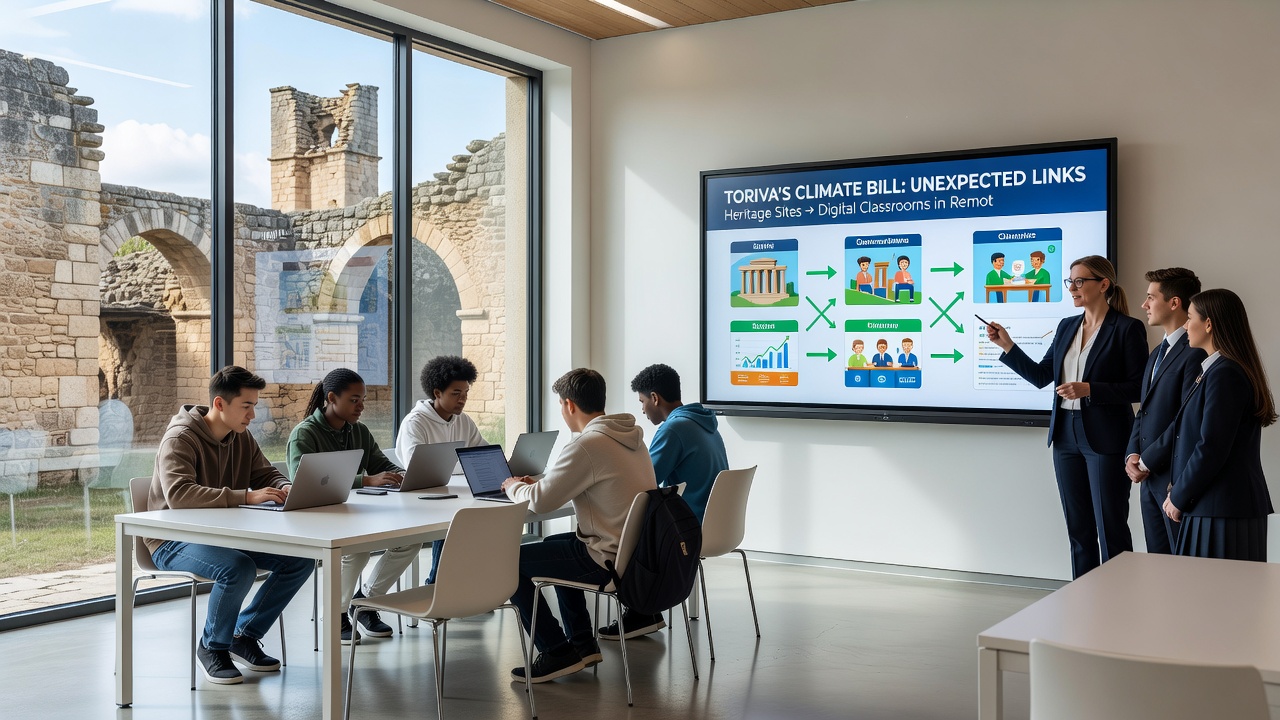
Partnerships between cultural preservation boards and education ministries have produced joint grant applications that streamline funding from the climate bill's dedicated pools. One study from the University of Melbourne outlines how comparable integrations elsewhere have preserved intangible knowledge through digital archives while expanding access for younger generations in isolated settings. These efforts emphasize open-source tools that allow communities to customize content around their specific heritage narratives and environmental challenges.
Monitoring dashboards track both emissions reductions at upgraded sites and participation rates in digital courses, with early numbers showing steady increases in enrollment from districts that previously lacked reliable electricity for devices. The bill's emphasis on measurable outcomes encourages transparent reporting, and quarterly reviews adjust allocations based on performance metrics gathered from field teams.
Future Projections and Ongoing Adjustments
As the September 2026 expansion approaches, planners continue to refine criteria for site selection to balance conservation priorities with educational needs. Additional districts have expressed interest in joining later phases, citing the dual benefits of cultural continuity and skill development for younger residents. Data collected so far suggests that the combined approach may serve as a template for other regions facing similar pressures from climate shifts and geographic isolation.
Conclusion
Toriva's climate bill demonstrates how single-policy instruments can address interconnected challenges by channeling resources toward heritage preservation and digital education simultaneously. The resulting projects in remote districts illustrate practical applications of integrated planning, where infrastructure serves multiple community functions without compromising core objectives in either domain. Continued evaluation through established monitoring systems will determine the long-term viability of these links as implementation moves forward.